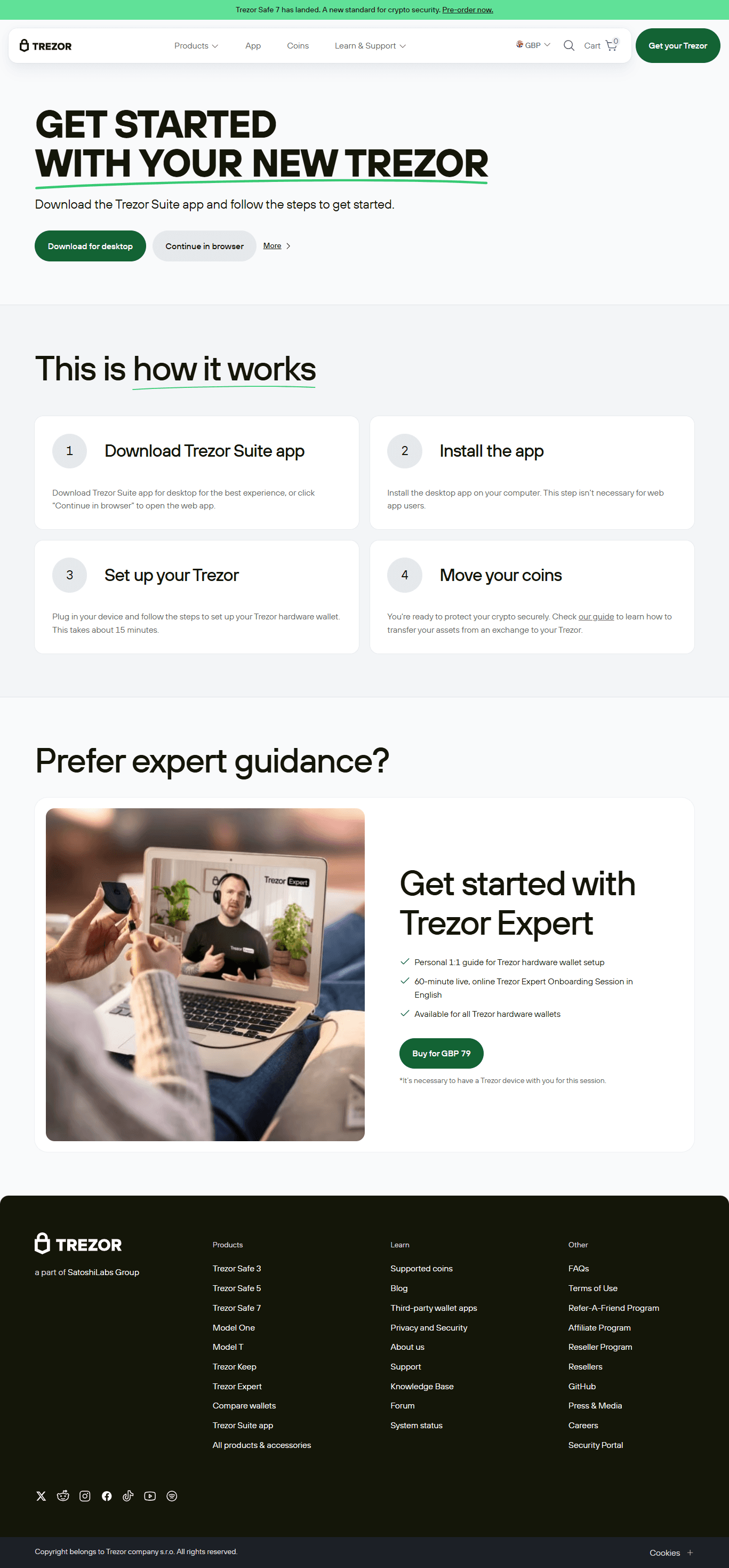
Trezor.io/start: Building a Secure Foundation for Cryptocurrency Self-Custody
Introduction
Trezor.io/start is the official entry point for configuring a Trezor hardware wallet, a trusted solution for secure cryptocurrency storage. This page is designed to help users transition from online or exchange-based storage to true self-custody, where they alone control their private keys. A correct setup through Trezor.io/start ensures long-term safety, ownership, and independence in managing digital assets.
This guide explores the purpose, process, and security philosophy behind Trezor.io/start in a clear and practical way.
The Role of Trezor.io/start in Crypto Security
Trezor.io/start functions as a security checkpoint. It ensures every user begins their hardware wallet journey in a verified and protected environment. The page prevents users from downloading fake software or interacting with manipulated devices.
Its role includes:
Guiding users to official wallet software
Preventing interaction with counterfeit firmware
Ensuring keys are generated securely
Establishing correct security habits from day one
This reduces the risk of irreversible mistakes.
Why Hardware Wallet Initialization Is Critical
The setup phase is when your wallet’s security is created. Unlike cloud wallets, hardware wallets generate cryptographic keys offline.
Security Advantages of Offline Generation
Keys never appear on an internet-connected device
Malware cannot intercept private data
Ownership remains exclusively with the user
Trezor.io/start ensures this offline model is preserved throughout setup.
Choosing the Right Environment for Setup
Your physical and digital environment matters.
Best Setup Conditions
Private room with no cameras or observers
Trusted computer with updated software
Secure internet connection
No screen-sharing tools active
A controlled environment prevents leaks of sensitive information.
Initial Device Inspection
Before proceeding with setup, users should inspect the hardware wallet carefully.
What to Look For
Factory-sealed packaging
No signs of prior use
Clean and untampered device
If anything seems unusual, the setup should not continue.
Connecting the Wallet for the First Time
Once connected to a computer, the device communicates only what is necessary.
Security at First Connection
No private data is transmitted
Device awaits firmware installation
User confirmation is required on the device screen
This ensures control remains with the user at all times.
Firmware Setup and Validation
Firmware gives the wallet its functionality.
Why Official Firmware Matters
Confirms device authenticity
Fixes known vulnerabilities
Expands asset compatibility
Firmware installed through Trezor.io/start is verified directly by the device.
Creating Your Wallet Identity
When a wallet is created, it becomes a unique cryptographic identity.
What Happens During Creation
Random entropy is generated
Private keys are formed internally
Wallet structure is locked to the recovery phrase
This identity cannot be duplicated without the recovery phrase.
Recovery Phrase: Your Master Access Key
The recovery phrase is the ultimate key to your wallet.
Important Characteristics
Grants full access to all funds
Works independently of the device
Cannot be reset or regenerated
Its security determines the safety of your assets.
Smart Recovery Phrase Storage Practices
Good storage practices protect against theft, loss, and damage.
Recommended Methods
Handwritten backups only
Storage in multiple secure locations
Protection from environmental hazards
Digital copies dramatically increase risk.
Adding PIN-Based Protection
The PIN adds a layer of defense against physical access.
Why the PIN Is Effective
Required for every device action
Delays increase after incorrect attempts
Prevents unauthorized use if stolen
PIN protection complements recovery phrase security.
Wallet Use After Successful Setup
Once setup is complete, the wallet is ready for use.
Typical Actions
Receiving crypto securely
Sending funds with manual approval
Viewing balances and transaction history
Managing multiple asset accounts
All sensitive actions require confirmation on the device.
Long-Term Wallet Maintenance
Security does not end after setup.
Ongoing Responsibilities
Keep firmware up to date
Review transaction details carefully
Store backups safely
Stay informed about security updates
Consistent habits maintain wallet integrity.
Common Errors That Compromise Security
Many users lose funds due to avoidable mistakes.
High-Risk Mistakes
Entering recovery phrases online
Using unofficial wallet software
Ignoring device verification steps
Trusting unsolicited support messages
Awareness is critical to prevention.
Who Should Prioritize Trezor.io/start
This setup method is ideal for:
Long-term investors
Security-conscious individuals
Users exiting centralized exchanges
Beginners learning self-custody
Anyone holding cryptocurrency benefits from proper setup.
Conclusion
Trezor.io/start is the foundation of safe and independent cryptocurrency ownership. It ensures hardware wallets are initialized securely, recovery phrases are handled correctly, and users maintain full control over their digital assets. By following the official setup process, users protect themselves from online threats, human error, and counterfeit tools.
A secure beginning leads to confident and long-lasting crypto management.